
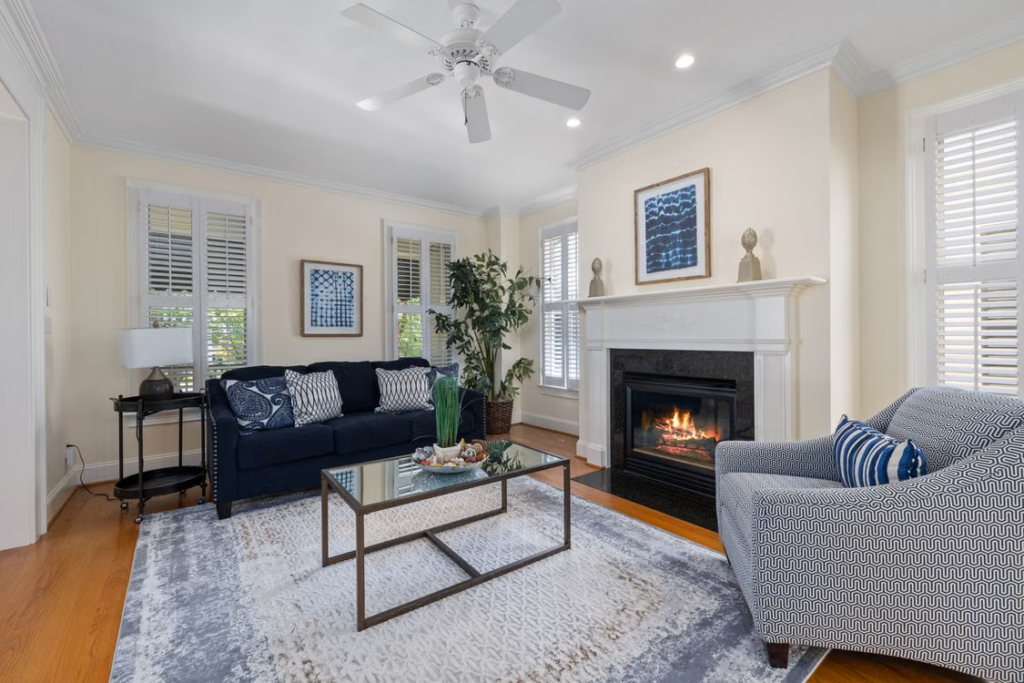
Nothing else brightens up a room like a shag rug…Or messes up a room like an out of proportion shag rug.
That’s the dilemma every homeowner faces. Nail the ratios and a shag rug grounds the space and ties the room together. Mess those up and it’s an awkward blob sitting on your floor.
Interior designers have rules they swear by for a reason. Rules help keep spaces feeling grounded and intentional. They help rooms stay balanced — no matter the style you lean towards.
The problem is: most rug buyers ignore these rules completely. They choose a rug they like, take it home, and cross their fingers.
This manual will teach you the rules of sizing, placement and proportion that professional designers follow daily.
Inside This Guide:
- Sizing Rules For Every Room
- Placement Rules Designers Follow
- Proportion Mistakes To Avoid
Why Shag Rugs Need Extra Planning
Shag rugs are having a serious moment right now.
Size-wise, the global area rugs market was worth USD 11.77 billion in 2024 and is expected to grow further to USD 16.91 billion by 2030. One of the largest factors contributing to that growth is high-pile textures like shag, making their way into snug maximalist interiors and warm, minimal ones alike thanks to designers who love them.
However shag rugs are not flatweaves. That extra pile impacts how a rug fits into a room, sits beneath furniture and its visual presence. A shag rug from a specialist like Rugs Direct will stand off the floor higher, feel softer and demand more attention than a low pile version of the same size.
Which is why the normal rules of rug shopping have to be tweaked a little. Sizes that would look proportional on a flatweave can seem bulky or large in shag. And placement that might work on a Persian can seem crowded when you’ve got an extra inch or two of rug sticking up.
That’s why the rules matter more here than with almost any other rug type.
Sizing Rules For Every Room
Proper sizing is the single most important factor in determining whether or not a shag rug will work in your room. Designers know formulas for each room — and they take the guessing out of it.
Living Room Sizing
The most popular room to put a shag rug in is the living room. It’s also where most people get sizing wrong.
The rule designers follow is simple:
- Medium: front legs of sofa and chairs sit on the rug
- Large: all furniture legs sit fully on the rug
The large option looks the best but needs a much larger rug. You need at least an 8×10 or 9×12 rug to properly accommodate a 3-piece seating group.
Avoid the dreaded “postage stamp” look that occurs when a small rug is placed directly in the center of a room, leaving a large perimeter of floor showing around all sides of the rug. This is by far the biggest mistake in furniture arrangement and it makes a room feel choppy.
Bedroom Sizing
Shag rugs are best suited for bedrooms. Nothing beats sinking your feet into that cushy carpet when you first step out of bed.
The designer rule for bedroom sizing:
- Rug should be at least 24 inches beyond the foot of the bed.
- For a king bed, that means a minimum 9×12
- For a queen, a minimum 8×10
A favorite designer trick is to position the rug perpendicular underneath the bottom third of the bed. It creates a crisp area around the headboard and allows for soft shag to greet your feet in the morning.
Dining Room Sizing
Dining rooms have the strictest rule of all:
The rug must extend at least 24 inches beyond every edge of the table.
This allows chairs to be pulled back without sliding off the rug. Chairs falling off a deep shag rug is precisely as irritating as it seems.
Size your tablecloth based on table seating. 6 person table would be a 9×12. 8 person table would be a 10×14.
Placement Rules Designers Follow
Size matters, but placement is what makes a good rug decision extraordinary.
Here are the placement rules designers follow every single time:
Rule 1: Center the rug, not the furniture.
First center the rug in the room. Afterwards position furniture around it.
Rule 2: Leave breathing room from walls.
Leave between 12 and 18 inches of bare floor between the edge of your rug and the wall. Too small a rug can make the room look smaller.
Rule 3: Anchor the seating.
In living rooms, fit the rug to where it touches every piece of furniture in the seating group. Including the front legs.
Rule 4: Consider the doorway.
Doors can catch on a shag rug if you have a thick pile near an entrance way. Always test for clearance if purchasing extra high pile shag for doors.
Rule 5: Layer with intention.
Layer smaller shag rugs on top of bigger jute or sisal rugs. Make sure the shag rug is always smaller than the rug it is on top of. Center it too.
Proportion Mistakes To Avoid
Proportion is the most complex of the three rules. How does the rug compare in size to everything else in the room?
The most common proportion mistakes with shag rugs:
- Purchasing a rug that matches your floor colour (annihilates anchor effect)
- Picking a shag pile that’s too tall for the room’s ceiling height
- Ignoring the visual weight of other textures in the room
Quick Tip: In rooms that have lots of hard surfaces (leather, glass, stone), incorporate a chunky shag rug to add some much needed softness. In rooms that are already filled with soft textures, choose a shorter pile shag so it won’t fight for attention.
Single-family housing starts data supports the proportion focus as well. Single-family starts in 2024 totaled 1.01 million units, an increase of 6.5% from the previous year – and each of those new homes represents a brand new chance to get proportions correct from day one.
The Final Word
Size, placement and proportion are absolutely critical when working with shag rugs. They make or break a room.
The rules are simple:
- Center the rug, then the furniture
- Leave breathing room from the walls
- Match the pile to the room
- Anchor every major furniture piece
Pick these 5 things correctly and any shag rug will look like a designer picked it specially for you.
Skip them and even the most expensive rug in the world will look off.
Yep. That’s it. The secret to designing with rugs is not about the rug…it’s about scaling, positioning and proportioning the rug to the room.