
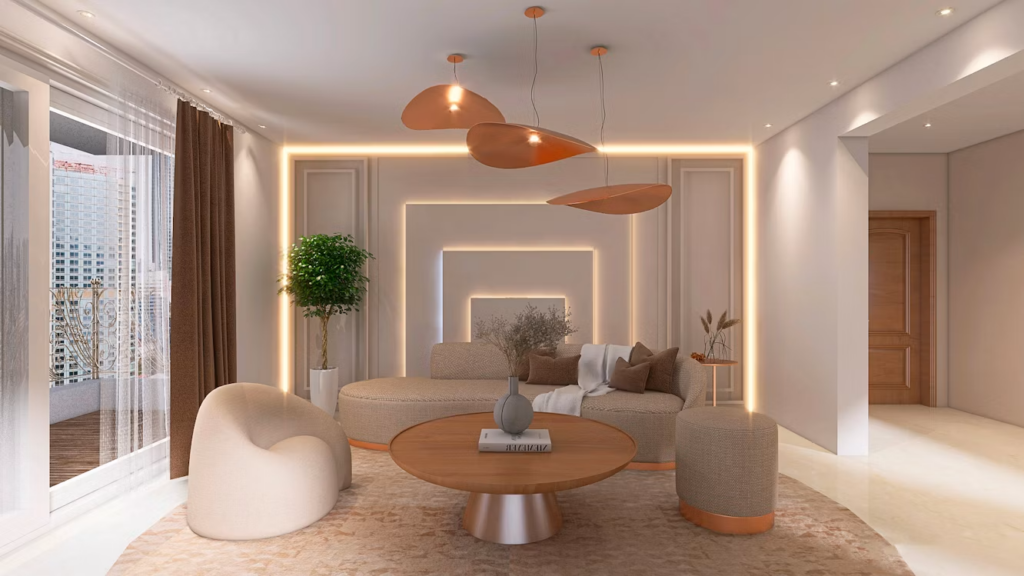
In modern architecture, light isn’t just something useful; it’s a building material all its own. How a space is lit can totally change how big it feels, its shape, and its whole vibe. Good lighting design goes beyond just making a room visible; it’s about creating an experience, guiding your eyes, and setting the mood for anyone in that space.
Light’s Impact on Architectural Mood
Light really messes with our heads in a good way! Bright, cool-toned light, kind of like the midday sun, can help us feel more awake and focused. That makes it great for home offices or kitchens. On the flip side, warm, dim light feels like a gentle sunset or candlelight, making us want to relax and get cozy. No wonder it’s a favorite for living rooms and bedrooms! Knowing how light affects our emotions is important for good design, and it’s something you should really think about right from the start of any project. Even the direction of light makes a difference. Pointing lights up can make a ceiling feel higher and a room grander, while shining them down creates a more focused, dramatic look.
Integrating Fixtures into Design Schemes
Light fixtures aren’t just there to give off light; they’re like sculptures that add to a room’s style. A cool pendant light can be the star of the show in a dining room, while hidden recessed lights can give you that clean, minimalist vibe. The trick is to pick fixtures that fit the building’s style and the mood you’re going for. For example, some well-placed brass wall lights can bring a touch of warmth and classic elegance to a modern hallway or reading nook, mixing old-school materials with new designs. The fixture itself becomes part of the decoration, looking good even when it’s turned off.
Materiality of Lighting Elements
The stuff light fixtures are made from really changes how the light spreads and how we see it. A frosted glass shade will give you a soft, even glow, but a metal fixture with holes can cast cool patterns of light and shadow on nearby surfaces. Even the finish on the fixture plays a part in the overall look. Matte black finishes feel modern and industrial, while shiny chrome looks sleek and reflective. Whatever material you choose should match the other finishes in the room, making everything feel connected and well thought out. This same attention to detail can extend to how a space is presented visually, with architectural rendering styles helping designers communicate materials, lighting, and overall design concepts before construction begins.
Smart Lighting for Contemporary Homes
Technology has opened up a whole new world for home lighting. Smart lighting systems let homeowners tweak the brightness, color, and timing of their lights using just a phone or their voice. This means you can create dynamic environments that change with your day. You could set up a “wake-up” scene that slowly brightens your bedroom to mimic a natural sunrise, or an “entertaining” scene that creates the perfect glow for when friends come over. These advanced lighting design techniques offer amazing customization and can even save energy by making sure lights are only on when you need them.
Achieving Balance in Illumination
The best lighting plans use a layered approach to make sure things are both practical and pretty. This usually means three types of lighting working together:
- Ambient Lighting: This is your general, overall light in a room, often from ceiling fixtures or recessed lights. It sets the basic brightness level.
- Task Lighting: This is focused light for specific activities, like a lamp next to your reading chair, under-cabinet lights in the kitchen, or a desk lamp for work.
- Accent Lighting: This kind of light highlights specific things, like a piece of art, a cool wall texture, or an architectural detail. Track lights and picture lights are common examples.
By mixing these three layers, you get a rich and flexible lighting setup that’s both useful and looks great.
Ultimately, getting good at lighting is all about making spaces that really work for the people living in them. It turns a simple building into a place that feels comfy, inviting, and truly like home.