
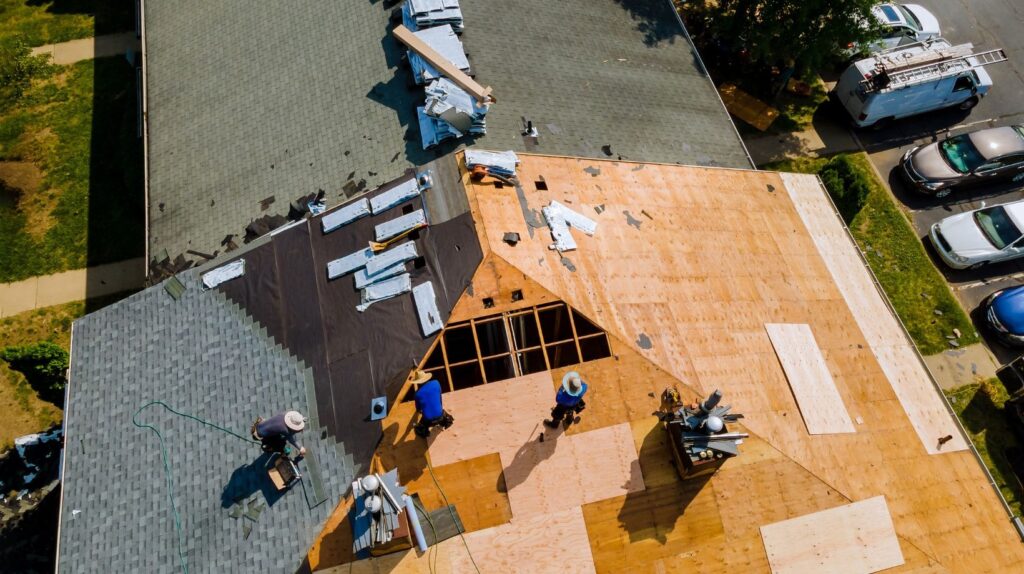
Austin’s residential architecture includes everything from mid-century homes and modern hillside properties to Spanish-inspired estates, historic houses, and custom Hill Country residences. Many of these homes have roofs that are considerably more complicated than a standard asphalt-shingle installation.
A complex architectural roof may include steep slopes, multiple levels, intersecting roof planes, dead valleys, dormers, turrets, skylights, custom metal sections, tile, low-slope additions, chimneys, and extensive roof-to-wall transitions.
These features can create a distinctive home, but they also make material selection, drainage, flashing, ventilation, and installation quality especially important.
The following Austin-area roofing companies offer services relevant to complex residential roofs. This is not an independently scored or definitive ranking. Homeowners should verify current insurance, warranties, certifications, references, and experience with the specific roofing material before hiring a contractor.
1. Driftwood Builders Roofing
Best for coordinating complicated roofing and exterior-envelope details
Driftwood Builders Roofing serves Austin and surrounding Central Texas communities with residential roof repair, replacement, inspections, metal roofing, tile repair, asphalt shingles, and low-slope roofing services.
The company may be a strong fit when a roofing project involves more than replacing the visible surface. Complicated homes often require the roofer to evaluate how the roof interacts with siding, windows, fascia, gutters, chimneys, valleys, walls, and drainage components.
That coordination is especially important around roof-to-wall intersections. Water can move behind siding, stucco, or other exterior materials when step flashing, counterflashing, kick-out flashing, or drainage details are missing or installed incorrectly.
Driftwood also works on properties that combine several roof types or materials. A custom residence may have asphalt shingles on the primary structure, metal roofing over a porch, tile accents, and a low-slope membrane over an addition. Each area requires a different installation method while still functioning as one connected drainage system.
The company documents projects with photographs showing existing conditions, tear-off, decking repairs, underlayment, flashing, and completed work. That documentation can be particularly useful on complex roofs because many of the most important components are no longer visible once the project is finished.
Homeowners can review Driftwood Builders Roofing’s roof repair and replacement guide before planning work on a complex architectural roof.
2. Kidd Roofing
Best for tile and mixed-material residential roofing
Kidd Roofing has provided residential roofing services since 1982 and works with composition shingles, metal, tile, built-up roofing, modified systems, and single-ply materials. The company also offers new-construction roofing for custom residential projects.
Its tile-roofing experience makes Kidd worth considering for Spanish, Mediterranean, Southwestern, and custom homes where the roof is a central architectural feature.
Tile roofing requires more than setting individual pieces in place. Contractors must account for the roof deck, underlayment, flashing, fastening method, tile profile, breakage, access, and the weight of the finished assembly.
Clay, concrete, and slate-like materials also behave differently. Some structures may require evaluation before a heavier product is installed, particularly when a homeowner is changing from asphalt shingles to tile or natural slate.
Kidd may also be relevant for properties containing a combination of tile, metal, shingles, or low-slope sections. The company states that its residential division works with a broad range of roofing materials and helps homeowners and builders develop custom roofing systems.
3. Wilson Roofing
Best for custom metal fabrication and varied roof systems
Wilson Roofing works with composition shingles, tile, metal, modified bitumen, and TPO roofing. The company also operates its own sheet-metal shop and can form metal roofing panels at the jobsite.
Those capabilities can be valuable on a complex architectural roof requiring custom panels, flashing, wall caps, transitions, valleys, or other fabricated components.
Metal roofing expands and contracts as temperatures change. Panels, clips, fasteners, seams, penetrations, and perimeter flashing must be designed to accommodate that movement while keeping water outside the building.
Custom metal fabrication can also become important when standard components do not fit an unusual roof geometry.
Wilson states that it works with custom home builders in Westlake, Lake Travis, Tarrytown, and the greater Austin area, with tile and metal roofing experience on high-end residential properties.
The company may therefore be worth considering for modern homes, Spanish-style properties, custom new construction, and renovations involving specialty metal or tile.
4. Austin Roofing & Construction
Best for modern roof designs and multiple roofing-system options
Austin Roofing & Construction offers residential and commercial roof repair, replacement, maintenance, metal roofing, shingles, TPO, coatings, and other roof services throughout Central Texas.
Its range of systems may be helpful for contemporary properties that combine steep and low-slope roof areas.
Modern residential architecture often includes parapets, low slopes, concealed drainage, rooftop equipment, large wall intersections, and roof sections that cannot be covered with conventional shingles. These conditions require careful coordination between materials and transitions.
The company also works with standing-seam metal roofing and discusses flat and low-slope systems used on modern Austin homes.
Austin Roofing & Construction may be worth evaluating for renovations where a homeowner wants to change the roof’s appearance, introduce metal roofing, or coordinate several roofing systems across one property.
As with any complex project, homeowners should request drawings, material specifications, flashing details, and an explanation of how water will move between different roof sections.
5. Hargrove Roofing
Best for slate, tile, and heavyweight architectural materials
Hargrove Roofing’s Austin operation offers shingle, metal, tile, and slate roofing services for residential and commercial properties.
The company may be a candidate for homeowners considering tile or slate, particularly when the material is central to the architectural character of the property.
Slate and tile roofs can provide distinctive texture, depth, and longevity, but they also involve important structural and installation considerations.
Heavy roofing materials may require evaluation of the deck and framing. Contractors must also understand underlayment, flashing, fastening methods, tile replacement, foot-traffic limitations, and how individual pieces will be repaired in the future.
Hargrove states that its tile-roof projects address the entire system, including the deck and flashing, rather than focusing only on the visible tile.
That system-based approach is important because tile itself is not always the primary waterproofing layer. Water may pass beneath individual pieces, making the underlayment and flashing critical to long-term performance.
What makes an architectural roof complicated?
A roof does not need to be unusually large to be complex.
Features that commonly increase project difficulty include:
- Multiple intersecting roof planes
- Steep or changing slopes
- Dead valleys
- Turrets and curved sections
- Dormers
- Numerous skylights
- Large chimneys
- Roof-to-wall intersections
- Mixed roofing materials
- Tile or slate
- Standing-seam metal
- Low-slope additions
- Concealed gutters or drainage
- Limited equipment and material access
Each additional transition creates another location where water must be directed safely toward a valley, gutter, scupper, drain, or downspout.
Complexity can also increase labor and material waste. Crews may need additional staging, safety equipment, custom fabrication, smaller work sections, and more time to complete flashing and transitions.
Questions to ask before hiring a contractor
Homeowners with complex roofs should ask more detailed questions than they might for a straightforward shingle replacement.
Important questions include:
- Has the contractor worked on this roofing material before?
- Can the contractor provide examples of similarly complex projects?
- How will valleys and roof-to-wall transitions be rebuilt?
- Will existing flashing be reused or replaced?
- How will low-slope sections be handled?
- Does the structure need evaluation before installing a heavier material?
- How will damaged decking be documented and priced?
- What ventilation system is proposed?
- Who will fabricate custom metal details?
- How will the contractor protect tile, stone, stucco, windows, and landscaping?
- Will photographs be provided before concealed components are covered?
- Which workmanship and manufacturer warranties apply?
The contractor should be able to explain the proposed roofing assembly, not simply provide the name and color of the visible material.
Compare the complete roofing system
A complex roof should be evaluated as a complete assembly that may include:
- Structural decking
- Underlayment
- Leak barriers
- Flashing
- Fasteners
- Ventilation
- Field roofing
- Valleys
- Hip and ridge components
- Gutters and downspouts
- Low-slope membranes
- Wall and siding transitions
A premium roofing material cannot compensate for deteriorated decking, poor drainage, inadequate flashing, or incorrect ventilation.
Similarly, a lower proposal may exclude custom flashing, structural evaluation, underlayment upgrades, difficult-access charges, or replacement of concealed components.
Homeowners should compare written scopes line by line rather than relying only on the total price.
The bottom line
Austin homeowners have several roofing contractors to consider for architecturally complex properties.
The best fit depends on the roof’s material, geometry, structural requirements, exterior finishes, drainage design, and the contractor’s direct experience with comparable projects.
Driftwood Builders Roofing may be a strong choice for projects requiring coordination between roofing and other exterior components. Kidd Roofing offers experience across tile and mixed roofing systems. Wilson Roofing provides custom metal fabrication capabilities. Austin Roofing & Construction works with several systems used on modern properties, while Hargrove Roofing offers slate and tile services.
Before hiring any contractor, verify current qualifications, request relevant project examples, compare detailed written scopes, and confirm how concealed conditions and custom details will be handled.
A complex architectural roof is not the place for a one-size-fits-all installation. The contractor should understand how every roof plane, penetration, material, and drainage component functions as part of one connected system.