

Quick Answer
Strong security companies prove themselves through verifiable standards rather than marketing: ULC-certified monitoring, system design matched to the property, and documented response times. Before signing, ask for the current monitoring certificate, the alarm verification method, and whether the equipment is tailored to your building instead of sold as a fixed package. That gap, not price, separates professional firms from budget operators.
Introduction
Choosing a provider to protect a home or business looks straightforward until the quotes arrive. On paper, most security companies in Calgary advertise the same features: cameras, sensors, mobile alerts, and around-the-clock monitoring. The pricing varies, the contracts vary, and the sales language blurs together. What rarely appears on the brochure is what determines whether a system performs during a real break-in or fire.
The meaningful differences sit below the surface. Two providers can install nearly identical hardware yet deliver very different outcomes, because monitoring certification, alarm verification, and response speed are governed by recognized standards rather than opinion. This guide walks through those benchmarks, with Supreme Security as a working example, so a buyer knows exactly what to ask.
What Separates Professional Providers From Budget Operators
The clearest dividing line in this industry is certification. A professional firm connects its systems to a monitoring station that holds recognized credentials, while a budget operator may rely on an uncertified call centre or a third-party arrangement it cannot fully control. That distinction affects response speed, accountability, and whether your insurer recognizes the coverage at all.
Certification and Accountability
In Canada, fire signal monitoring is governed by the CAN/ULC-S561 standard, which sets requirements for staffing, equipment redundancy, response times, and the physical security of the receiving centre. The ULC certificate is the only physical proof that the monitoring on your premises conforms to this standard.
Insurers often demand proof of compliance before offering coverage, and non-compliance can mean higher premiums or denied claims. A provider that cannot produce this documentation has not met the standard, whatever its sales material says.
Reading Past the Sales Pitch
When you evaluate proposals, certain questions cut through the marketing quickly. The answers reveal whether a security company operates to a professional benchmark or simply resells equipment.
- Monitoring certification: Can the provider produce a current ULC certificate for its signal receiving centre?
- Ownership of monitoring: Is the station operated in-house, or quietly subcontracted to an unnamed party?
- Equipment standards: Does the hardware carry recognized listings, or is it generic and unbranded?
- Service records: Are inspections, testing, and maintenance documented on a regular schedule?
Pro Tip: Ask to see the actual monitoring certificate rather than accepting a verbal assurance. A reputable firm will share it without hesitation, and the certificate should be current, issued within the past year and showing a future expiry date.
Accountability also shows up in contract terms. Reputable firms explain cancellation policies, equipment ownership, and what happens to monitoring if you relocate, while weaker operators leave those answers to the fine print.
Matching the System to the Property: Residential and Commercial Needs
A common mistake is assuming every property needs the same configuration. The protective goals of a family home differ sharply from those of a warehouse or retail floor, and the better providers design for each property type rather than forcing one template onto both.
Where the Requirements Diverge
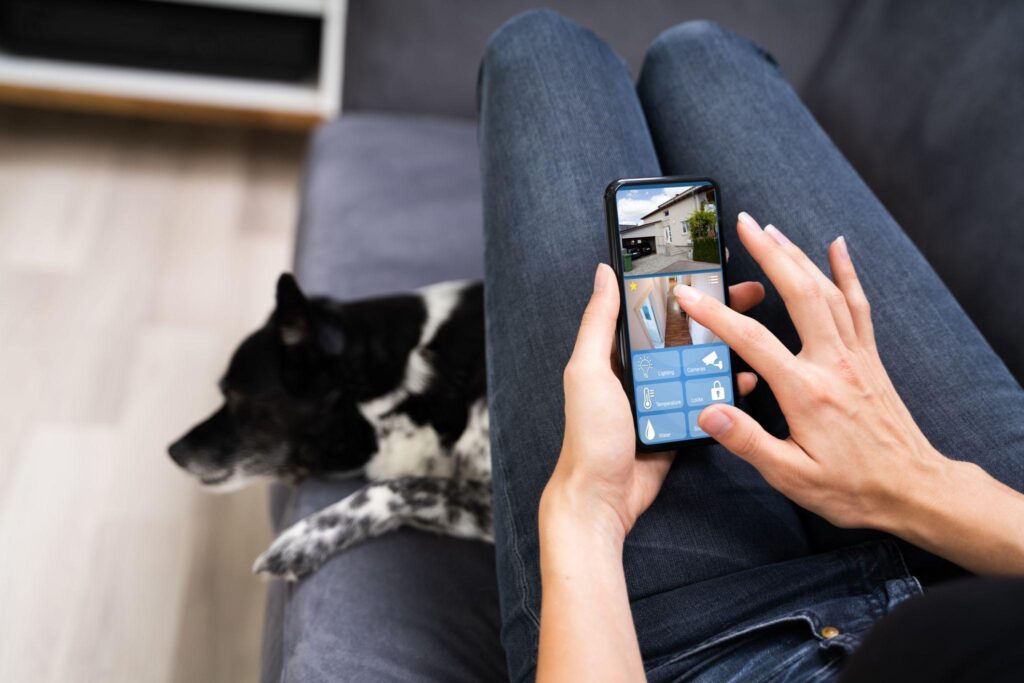
Effective residential security prioritizes perimeter detection, life-safety devices, and simple daily operation that every household member can manage. Business environments introduce additional layers: access control, employee accountability, regulatory compliance, and integration with fire systems.
This is where commercial alarm systems become genuinely complex, since they must coordinate intrusion detection, environmental sensors, and signal monitoring across larger footprints. The table below outlines how priorities typically shift between the two property types:
|
Design Factor |
Home Environment |
Business Environment |
|
Primary risk |
Intrusion, fire, after-hours entry |
Theft, internal loss, liability, compliance |
|
Access control |
Basic arming and disarming |
Multi-user credentials and audit trails |
|
Monitoring scope |
Intrusion and smoke or heat |
Intrusion, fire, environmental, video verification |
|
Regulatory weight |
Local bylaws |
Fire code and insurer requirements |
|
Scalability need |
Low |
High, across zones or multiple sites |
Why Tailored Design Matters
A provider willing to assess your specific layout, occupancy patterns, and risk profile delivers better protection than one quoting a fixed bundle. Calgary’s climate also influences placement, since deep-freeze winters and chinook temperature swings affect sensor performance and outdoor wiring choices.
Supreme Security illustrates the tailored approach: the risk evaluation and custom system design come first, at no charge, and the proposal follows from what the property actually needs. The firm has worked this way in Calgary since 1985, and assessment-first remains a reliable marker of professional practice, whichever provider you select.
Monitoring, Response, and the Standards That Actually Matter
Once an alarm triggers, what happens next determines whether a system is genuinely protective or merely decorative. Response quality is measurable, and it deserves close attention before you sign.
Verification Changes Everything
The Calgary Police Service no longer dispatches officers to single-zone alarm activations, and alarm companies must attempt to reach at least two key holders before requesting police, a policy driven by the volume of false activations. Industry reporting puts user error behind roughly three-quarters of false alarms.
Strong providers meet the requirement through Enhanced Call Verification, confirming a genuine event through video, audio, or multiple sensor activations before escalating. Verified calls receive priority response, while unverified ones face delays or false-alarm penalties under the city’s alarm bylaw.
Questions That Reveal Response Quality
When comparing providers on response capability, focus on the operational details that determine real-world performance:
- Verification protocol: How does the station confirm a genuine event before escalating?
- Redundancy: What backup communication paths exist if the primary line fails?
- Response documentation: Are average handling times measured and available for review?
- Staffing: Is the monitoring centre staffed continuously by trained operators?
A provider that cannot answer these questions clearly is unlikely to perform well during an actual incident.
Key Takeaways for Choosing a Provider
The decision comes down to three checks any buyer can run: certification, design, and response. Look for monitoring backed by a current ULC certificate, system design matched to your property type, and a documented verification process that prioritizes genuine alarms.
Providers who assess before they quote, share credentials openly, and explain their response protocols have earned a place on the shortlist. Those benchmarks separate dependable security companies from the rest.