
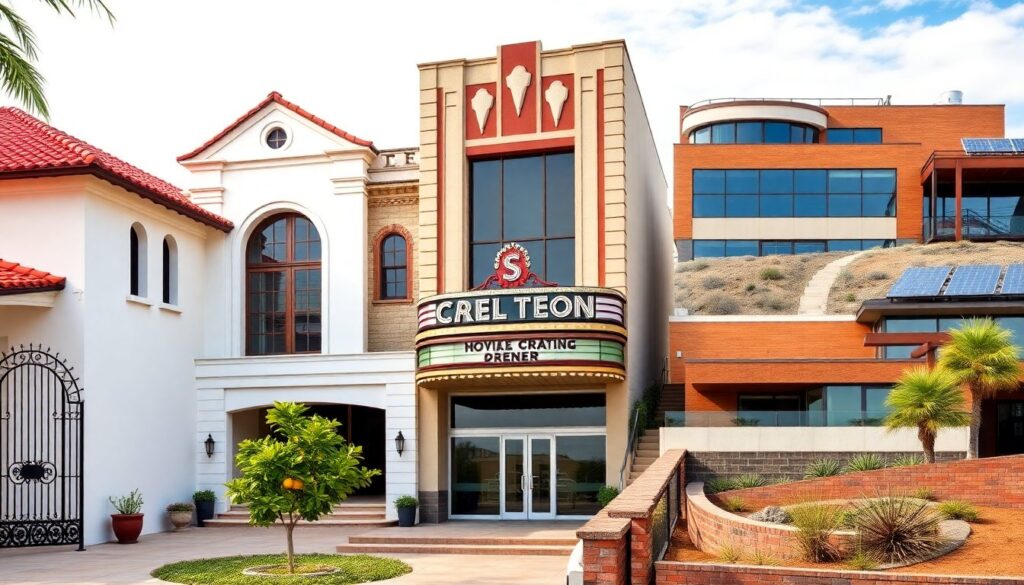
Architectural styles in Los Angeles show layers of history and design. They reveal Spanish missions, American revival trends, and 20th-century innovation. This guide lists key styles and explains how they shaped neighborhoods, skylines, and daily life. Readers will see clear examples and learn how each style works in the city context.
Key Takeaways
- Architectural styles in Los Angeles reflect its layered history, from Spanish Colonial and Mission Revival to 20th-century innovations.
- Spanish Colonial and Mission Revival styles shaped the city’s early identity with features like stucco walls and red tile roofs, influencing residential and public buildings.
- Modernist styles such as Art Deco, Streamline Moderne, and Midcentury Modern adapted to LA’s climate and culture, emphasizing glamour, speed, and indoor-outdoor living.
- Contemporary trends include adaptive reuse, sustainable design, and postmodern landmarks that blend historic elements with new functions and environmental goals.
- Preservation efforts protect historic architecture while design reviews ensure new developments respect Los Angeles’ architectural heritage.
Historic Roots: Spanish Colonial, Mission Revival, And Beaux‑Arts Influence
Spanish Colonial and Mission Revival gave Los Angeles its early civic and residential identity. Spanish Colonial introduced white stucco walls, red tile roofs, and central courtyards. Mission Revival borrowed from California mission missions. It used bell towers, arcades, and simple ornament. Wealthy patrons and city planners favored these styles for homes and public buildings in the late 19th and early 20th centuries.
Beaux‑Arts influenced civic architecture after the 1900 Exposition designs grew popular. Architects trained in Beaux‑Arts used symmetry, classical columns, and stone facades. They applied that language to libraries, courthouses, and bank buildings. The style signaled permanence and civic pride. It shaped downtown blocks and grand boulevards.
Architectural styles in Los Angeles mixed these historic modes in residential neighborhoods. Craftsmen adapted tile work and iron grilles to local materials. Developers repeated courtyards and verandas to suit the climate. They placed decorative details on modest bungalows and on larger Spanish Revival estates alike. The result made whole districts feel cohesive.
Examples help people see the influence. They can visit Olvera Street for early Spanish elements and Hancock Park for grand revival houses. Public buildings like the Los Angeles County Museum of Art’s older wings show Beaux‑Arts planning cues. Tour guides highlight these buildings and explain how they influenced later planning decisions.
Preservation groups protect many historic buildings today. They document original materials and require repairs that match original details. Cities enforce design reviews for new construction near historic districts. This protection keeps the visual links between early Spanish influence and later civic grandeur intact.
The Rise Of Modernism: Art Deco, Streamline Moderne, And Midcentury Modern
Art Deco arrived in Los Angeles in the 1920s and 1930s. Architects used geometric ornament, vertical emphasis, and stylized motifs. They applied these features to movie theaters, commercial buildings, and some apartment blocks. The style emphasized glamour and progress. It fit Hollywood’s image and the city’s boom-era optimism.
Streamline Moderne followed Art Deco and simplified its lines. Architects used horizontal bands, curved corners, and nautical references. Buildings often used smooth stucco and glass block windows. They suggested speed and machine-age confidence. Streamline Moderne suited diners, bus stations, and coastal homes.
Midcentury Modern shifted priorities in the postwar years. Architects favored open plans, floor-to-ceiling glass, and a stronger link between interior and landscape. They used steel, exposed wood, and new structural systems. The style spread in suburbs and in custom homes in hillside locations. Prominent architects built signature houses that showcased these ideas.
Architectural styles in Los Angeles adapted modernist ideals to climate and topography. They used deep overhangs and sliding glass walls to manage sun and breeze. Builders experimented with modular construction to lower costs and speed up work. Developers marketed those houses to returning veterans and growing families.
Iconic midcentury sites remain popular. They attract architects, filmmakers, and homebuyers. Preservation groups list notable examples on local registers. Educators include these buildings in tours that teach how modernism changed daily life in Los Angeles.
Contemporary And Eclectic Trends: Adaptive Reuse, Sustainable Design, And Postmodern Landmarks
Adaptive reuse transformed old factories and theaters into offices, lofts, and cultural centers. Developers kept historic shells and placed modern interiors inside. They preserved street character while adding new functions. Adaptive reuse made downtown and industrial districts livelier and more mixed-use.
Sustainable design appears across recent projects. Architects apply passive cooling, solar panels, and native landscaping. They use recycled materials and water-saving systems. These choices cut energy use and lower operational costs. Clients and city incentives encourage sustainable solutions.
Postmodern landmarks introduced playful forms and historical pastiche in the late 20th century. Architects mixed classical elements with bold colors and unusual shapes. They created civic buildings that looked expressive rather than purely functional. These buildings challenged modernist restraint and added visual variety to the city.
Architectural styles in Los Angeles show eclectic mixes today. New buildings may reference Spanish details, use glass and steel, and include green roofs. Designers combine old and new and address code and environmental goals. They aim to serve users and the larger urban fabric.
Public projects and private developments both show these trends. Adaptive reuse projects often house creative firms and cultural groups. Sustainable office towers attract tenants focused on operational savings. Postmodern civic buildings invite public commentary and sometimes controversy. Each trend leaves a visible mark on streets, plazas, and neighborhoods.
People study these trends to understand change in the city. They look at maps, compare before-and-after photos, and read permit records. This work helps planners and residents decide how to guide future growth while respecting the city’s architectural identity.