
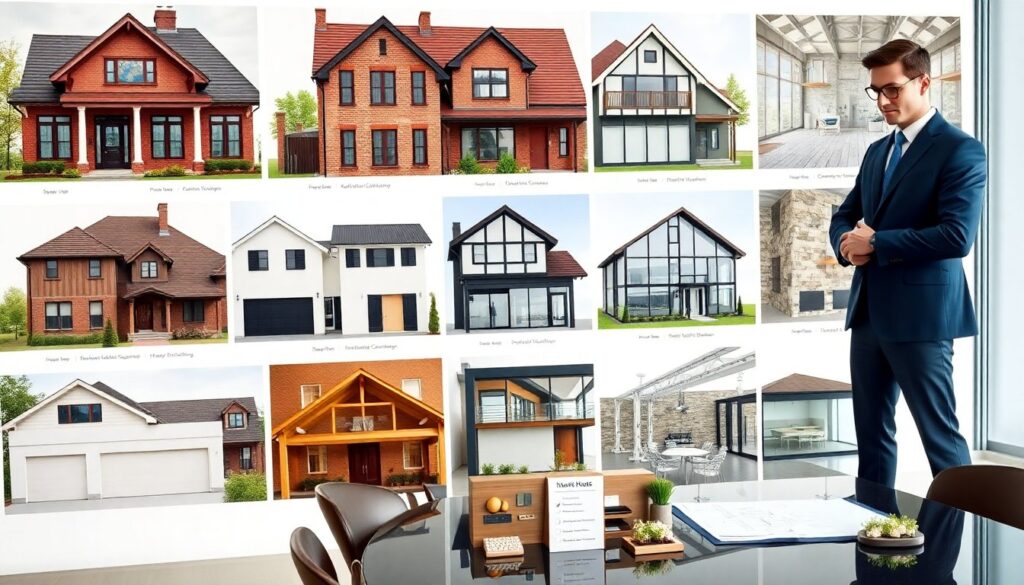
Different home architectural styles help people pick a house that fits taste and site. This guide lists common styles and main features. It shows how to compare style, lot, budget, and lifestyle. It helps readers make clear choices in 2026.
Key Takeaways
- Different home architectural styles cater to varied tastes and site conditions, making style selection crucial for design satisfaction.
- Historical styles like Victorian and Colonial emphasize symmetry, ornamentation, and traditional materials, but may require higher maintenance and costs.
- Modern styles such as Mid-Century Modern and Contemporary Minimalist prioritize open plans, natural light, and use of materials like glass and steel for clean aesthetics.
- Assessing your lot’s features, budget, lifestyle needs, and future plans ensures your chosen architectural style fits your living requirements and local regulations.
- Working with experienced architects and builders familiar with specific styles helps in accurate budgeting, compliance, and achieving desired design outcomes.
- Narrowing down to a shortlist and evaluating styles in real settings improves decision confidence and helps balance style, cost, and functionality for your home.
Popular Historical Styles And Their Defining Features
Victorian
The Victorian style shows steep roofs, decorative trim, and tall windows. It often uses asymmetry and towers. Homeowners choose painted trim and textured siding to keep the look. Many Victorian houses keep original woodwork and stained glass. Renovators must plan for high maintenance and older wiring when they restore the style.
Colonial
Colonial houses show symmetry, central doors, and evenly spaced windows. They use brick or clapboard siding and simple cornices. Interiors often feature central halls and formal rooms. Builders can adapt Colonial plans to modern needs while keeping the classic facade.
Craftsman and Bungalow
The Craftsman style favors low-pitched roofs, wide eaves, and exposed rafters. Porches sit under the main roof and use tapered columns. Interiors show built-in cabinets and natural wood. Bungalows offer a compact, efficient plan. Buyers pick this style for clear structure and visible craftsmanship.
Greek Revival and Neoclassical
Greek Revival homes display columns, pediments, and strong cornices. They borrow from classical temples. Neoclassical homes keep similar elements but scale them for modern needs. Both styles use symmetry and formal entryways to convey permanence.
Tudor and Cottage
Tudor houses show steep gables, decorative half-timbering, and narrow windows. Cottages keep a cozy scale, arched doors, and mixed materials. These styles emphasize texture and storybook charm. They suit sloped lots and wooded settings.
Key identification tips
Look at roof pitch, window arrangement, entry design, and materials. Note ornamentation level and symmetry. Photograph the house and compare details to style guides. Architects and real estate agents can confirm style and suggest period-appropriate updates.
Modern And Contemporary Styles: Materials, Floor Plans, And Aesthetic Principles
Mid-Century Modern
Mid-century modern uses flat planes, open plans, and large glass walls. It favors natural materials like wood and stone. Interiors connect to exterior spaces with sliding glass and patios. Buyers choose mid-century for clean lines and indoor-outdoor flow.
Contemporary Minimalist
Contemporary minimalist homes use simple forms, neutral palettes, and few details. They emphasize light and negative space. Materials often include concrete, steel, and large glass panels. Floor plans stay open and flexible for multiple uses.
Industrial and Loft
Industrial homes reuse warehouse shells with exposed beams, ductwork, and concrete floors. They keep large windows and high ceilings. Designers add partitions or mezzanines to form private rooms. Industrial style suits urban lots and creative uses.
Sustainable and Passive Design
Sustainable homes use insulated walls, efficient windows, and solar panels. Passive design places living spaces to catch sun and shade. Materials include recycled products and low-VOC finishes. Designers focus on energy use, water use, and heat control to lower costs.
Materials and finishes
Modern styles favor glass, steel, and smooth cladding. They often use continuous flooring to link rooms. Finishes stay matte or soft to reduce visual clutter. Landscape design complements straight lines with simple plantings.
Floor plans and flow
Modern plans move public spaces to the rear or center of the lot. They place bedrooms for quiet and view. Open plans use fewer corridors and more multiuse space. Buyers should test furniture layouts in a scaled floor plan before they buy or build.
Aesthetic principles
Modern homes stress clarity, proportion, and function. They cut excess decoration and show structure. Designers use contrast between solids and voids to shape views. Clients should set clear priorities for light, view, and privacy.
How To Choose The Right Style For Your Lot, Budget, And Lifestyle
Assess the lot first
Measure slope, orientation, and access. Note sun paths and views. Check local zoning and historic rules. These limits shape style choices. For example, narrow urban lots favor vertical plans. Wide suburban lots allow sprawling plans.
Match the budget
Estimate construction and long-term costs. Ornate styles add labor and repair costs. Simple forms lower build cost and maintenance. Energy-efficient choices raise upfront cost but cut bills. Buyers should get rough quotes for their top three styles.
Consider lifestyle needs
List daily routines and must-have spaces. Families often need storage, play space, and multiple bathrooms. Entertainers need open living areas and flow to the outdoors. Retirees may prioritize one-level plans and low maintenance.
Plan for future use
Decide if the house must adapt for work, aging, or rental. Open plans convert to home offices. Extra rooms can become rentals or guest suites. Choose a style that allows reasonable remodels without destroying the character.
Work with professionals
Hire an architect or designer who knows local styles and codes. Ask to see past projects and client references. Use a builder who can cost and schedule the chosen style. Insist on written estimates and a clear scope to reduce surprises.
Make a short list and test it
Create a short list of three styles. Compare photos, sample materials, and rough budgets. Visit local homes or model houses when possible. Evaluate how each style feels in sunlight and in common weather for the region.
Decision checklist
Tick boxes for site fit, cost, daily needs, and future flexibility. Choose the style that scores highest on practical points. Keep one style as a preferred look and one as a backup. This method helps buyers pick a design they will enjoy and maintain.