
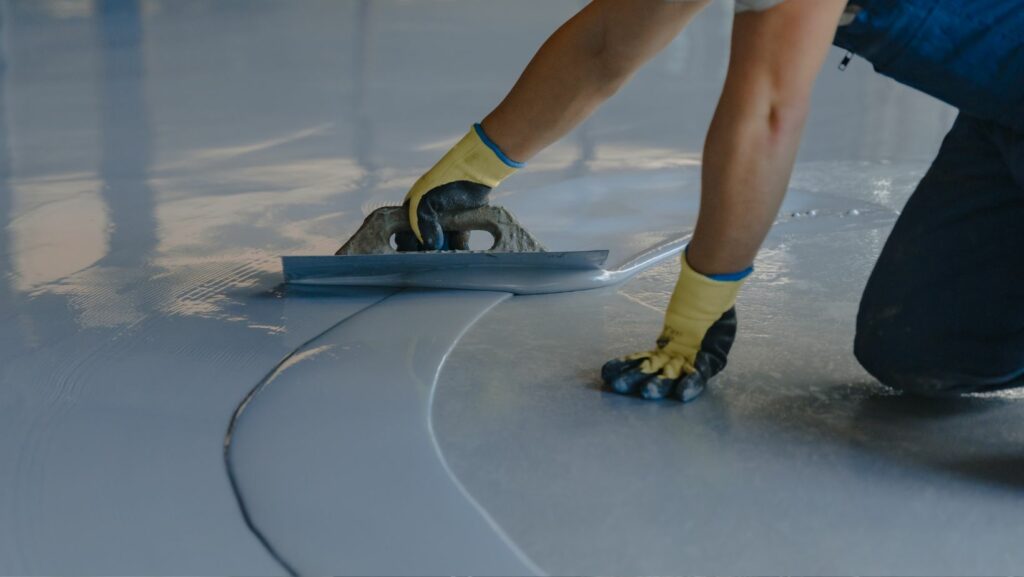
Traditional epoxy floors have been the standard for garages and industrial spaces for decades, but the chemical industry is constantly evolving. Today, they are being replaced by Polyurea and Polyaspartic-based systems. These materials were originally developed to protect bridge steel structures and pipelines from corrosion. Now, this technology has been adapted for residential and commercial use. Such coatings are significantly superior to epoxy in terms of strength, drying speed, and resistance to external factors.
Technical advantages over traditional materials
The main difference between polyurea and epoxy resin lies in its chemical structure, which offers a unique combination of hardness and elasticity. Among the main advantages are:
- Elastomeric properties. The material can stretch and return to its original shape, allowing it to withstand the thermal expansion of concrete without cracking.
- Chemical resistance. The polyurea coating is inert to gasoline, motor oils, salts, solvents, and even certain acids, making it ideal for technical spaces.
- Mechanical strength. Polyurea forms an extremely dense layer that is four times more resistant to abrasion and impact loads than standard epoxy.
Due to its flexibility, this material solves the main problem of rigid coatings—delamination during seasonal temperature fluctuations. When a concrete slab contracts in winter or expands in summer, polyurea moves with it, maintaining the seal and integrity of the protective layer. This is critical for unheated garages and outdoor areas where ordinary paints quickly develop a “spiderweb” of cracks.
UV resistance and color stability
One subtype of this chemistry is aliphatic polyurea (often presented as Polyaspartic), which possesses absolute resistance to UV radiation. Unlike epoxy resins, which turn yellow and become brittle under sunlight within a few months, polyaspartic coatings remain clear and retain color saturation for years. This specific property explains the frequent use of such coatings on outdoor terraces, balconies, and entryways.
Features of the installation process
It is important to know that applying polyurea coatings requires high qualifications and specialized equipment because the “pot life” (working time) of the mixture after blending the components is very short. Several main stages of installation can be identified:
- Mechanical preparation. Mandatory concrete grinding with diamond grinders to open the pores, ensuring deep primer penetration.
- Base repair. Filling all potholes and cracks with special fast-curing polymers to create a perfectly level base.
- Multi-layer system. The system usually consists of a base coat, decorative chips (flakes), and a clear topcoat.
The key factor in longevity is adhesion to the concrete, which is achieved due to the material’s low viscosity: it soaks into the slab structure like water and then instantly hardens, creating “roots.”
One-day installation
The most significant benefit for the customer is the curing speed of polyaspartic systems. While a classic epoxy floor requires 3–5 days for the full cycle of work and drying, polyurea allows all stages (grinding, priming, flake application, and top-coating) to be completed in a single business day. You can walk on the new floor as early as 4–6 hours after completion, and return heavy furniture or park a car in the garage after 24 hours, minimizing inconvenience for the owners.
Applications and maintenance
The versatility of its physical characteristics allows these coatings to be used in practically any area where cleanliness, aesthetics, and durability are important. Most often, you can find these coatings in the following spaces:
- Private garages and workshops. Protection against hot-tire pickup, dropped tools, and technical fluid spills.
- Commercial objects. Warehouses, showrooms, and restaurant kitchens require compliance with sanitary standards and ease of cleaning.
- Outdoor zones. Patios, pool decks, and stairs are where weather resistance and slip safety are essential.
The monolithic, seamless structure prevents the accumulation of dirt, mold, and bacteria, making these floors a hygienic choice for any room. Maintenance does not require special agents: regular damp mopping or rinsing with a hose is enough to restore the surface’s original shine. Due to the high density, dirt does not penetrate the material but stays on the surface, from where it is easily removed.